


PIKTRONIK Joins the NEO-TWIN Research and Innovation Programme
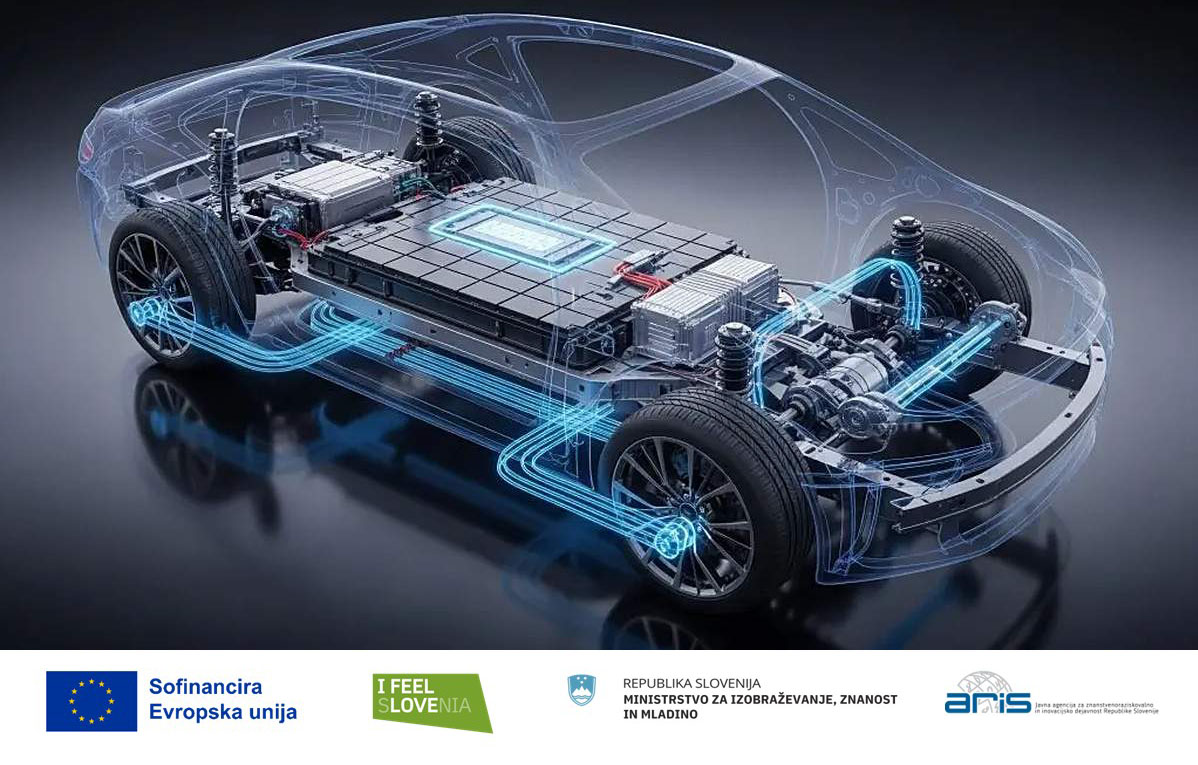
The main objective of the NEO-TWIN programme is to develop and demonstrate the innovative NEO-TWIN SUITE technology portfolio, which brings together a new generation of methods, tools and products for innovative diagnostics and prognostics, as well as model-based control of key powertrain systems in electric and electrified vehicles based on digital twins. The key technological impact of the NEO-TWIN programme is to achieve substantial advances in the safety, sustainability and reliability of electric and electrified vehicles. Within the programme, these advances will be demonstrated on batteries, electric machines, inverters and fuel cells.
NEO-TWIN SUITE comprises an embedded (on-board) NEO-TWIN SUITE and a cloud-based NEO-TWIN SUITE, interconnected through an interoperable digital twin platform that provides state-of-the-art data management and cybersecurity. The embedded NEO-TWIN SUITE integrates innovative and advanced physical sensors and measurement techniques with a cyber-physical system for monitoring, diagnostics and advanced model-based control. Monitoring and diagnostics are based on advanced scalable physics-based and data-driven approaches, as well as innovative virtual sensors for determining the internal states of devices. The cloud-based NEO-TWIN SUITE leverages greater computational capabilities to enable advanced diagnostics and prognostics.
The final results of the programme include a TRL 6 demonstration of NEO-TWIN SUITE in a real-world environment using a vessel and a mobile working machine as demonstration cases. During the development phases of the programme, dedicated TRL 4 NEO-TWIN SUITE demonstrators will also be developed for batteries, electric machines, inverters and fuel cells. These demonstrators are specifically designed to ensure a high degree of transferability and adaptability and, together with the TRL 6 demonstrators, represent key building blocks for the long-term impact of the NEO-TWIN programme.
The NEO-TWIN programme addresses societal and economic impacts at multiple levels, ranging from substantial improvements in the safety, sustainability and reliability of electric and electrified vehicles to the development of a broad portfolio of methods, tools and products with market potential. The programme's main result is NEO-TWIN SUITE, an integrated product with significant breakthrough potential that can be adapted to the needs of individual end users. NEO-TWIN SUITE also incorporates numerous innovative methods, tools and products with market potential that can be commercialised independently. These include an interoperable digital twin platform and a secure convergence layer between OT and IT, as well as numerous innovative sensors, methods and tools for advanced diagnostics, prognostics and model-based control. At the same time, the methods, tools and products developed within the programme are transferable to other vehicle components and to other sectors.
The Slovenian Research and Innovation Agency (ARIS) approved EUR 4,993,819.13 in co-funding for the programme, while the total value of the programme amounts to EUR 7,432,280.88.
In addition to the programme coordinator, the Faculty of Mechanical Engineering at the University of Ljubljana, NEO-TWIN brings together renowned public research organisations as well as large, medium-sized and small enterprises: Domel d.o.o., Emsiso d.o.o., Faculty of Electrical Engineering at the University of Ljubljana, Faculty of Electrical Engineering and Computer Science at the University of Maribor, Hidria d.o.o., Jožef Stefan Institute, National Institute of Chemistry, Piktronik d.o.o., Smartis, informacijski sistemi d.o.o., and the Slovenian National Building and Civil Engineering Institute. The preparation of the programme proposal was also actively supported by the SRIP ACS+ office.
Through its objectives, research approaches, technological solutions and results, the NEO-TWIN programme represents an important step towards safer, more sustainable and more digital mobility, while further strengthening collaboration between science and industry.